






07 Aug Why do we sleep worse on holiday?
The science behind sleeping away from home
Holidays are all about switching off, enjoying free time, and getting some well-deserved rest. Yet, for many people, the first few days away bring the opposite experience: they struggle to fall asleep, wake up several times during the night, or simply feel less rested than they do at home. Although it may seem surprising, there is a scientific explanation. Our brains are naturally wired to stay more alert when we sleep in an unfamiliar environment. On top of that, changes in routine, temperature, noise levels, and sleeping conditions can all affect the quality of our rest.
Here’s why it happens and what you can do to sleep better while you’re away from home.
What happens in your brain when you sleep somewhere new?
Have you ever noticed that your first night in a hotel, holiday apartment, or even at a relative’s house never seems as restful as sleeping in your own bed? This phenomenon is known as the first-night effect.
Several scientific studies have shown that when we sleep in a new environment, one side of the brain remains more active than usual as a protective mechanism. This response dates back to our ancestors, when sleeping in an unfamiliar place meant being more vulnerable to potential dangers.
While those threats no longer exist in modern life, the brain continues to react in much the same way. As a result, sleep tends to be lighter, brief awakenings become more frequent, and it often takes one or two nights for the body and mind to fully adapt to the new surroundings. That’s why it’s perfectly normal to sleep much better from the second or third night of your holiday onwards.
Factors that affect sleep during your holiday
Besides this natural protective response of the brain, several other factors can reduce sleep quality when you’re away from home.
Changes in temperature
Bedroom temperature is one of the most important factors influencing sleep quality. Rooms that are too hot or too cold make it harder for the body to reach the ideal temperature needed to fall asleep.
During the summer months, this becomes even more significant, especially when travelling to destinations where nights remain particularly warm.
Different noises
Even if noise levels aren’t especially high, the brain processes unfamiliar sounds differently. Traffic outside, waves breaking on the shore, an air conditioning unit, neighbours, or even complete silence if you’re used to living in a busy city can all make a difference.
These unfamiliar sounds may trigger brief awakenings throughout the night, many of which we don’t even remember the following morning.

Changes to your routine
Holidays often mean staying up later, sleeping in, taking longer naps, or eating meals at different times than usual. All these changes can disrupt our circadian rhythm—our internal biological clock that regulates the sleep-wake cycle.
The greater the difference from our normal routine, the longer it takes the body to adjust.
A different mattress
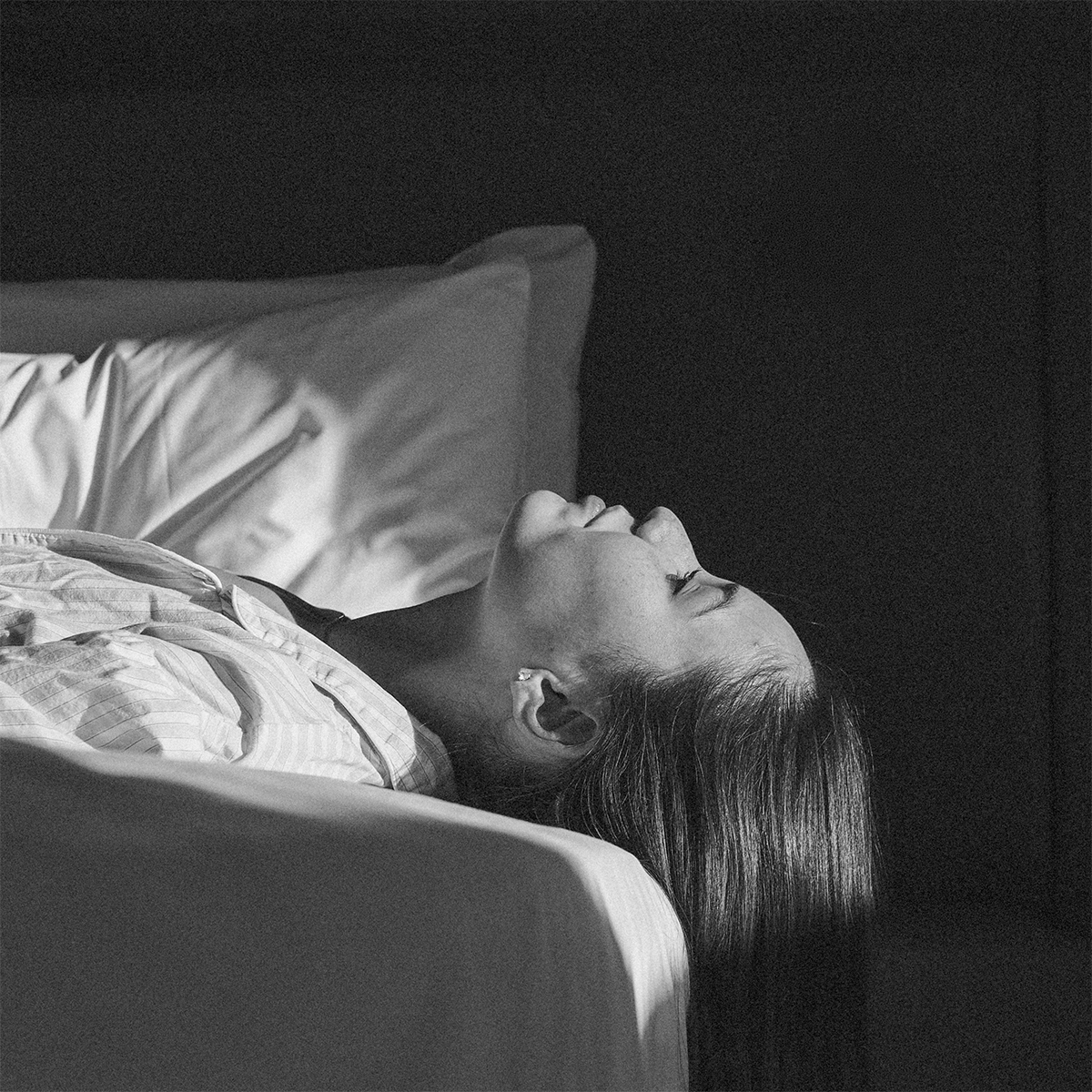
Your mattress also plays an important role in how well you sleep. Everyone becomes accustomed to a certain level of firmness, support, and comfort. Sleeping on a surface that’s significantly different from the one you’re used to may lead to muscle discomfort, changes in sleeping posture, or a feeling of less restorative sleep.
That’s why investing in a mattress that promotes quality sleep all year round doesn’t just improve your rest at home—it also helps you better understand which features you value most when sleeping away from home.
Practical tips for sleeping better while on holiday
Although we can’t always control our surroundings, there are a few simple habits that can help you enjoy a better night’s sleep when you’re away from home.
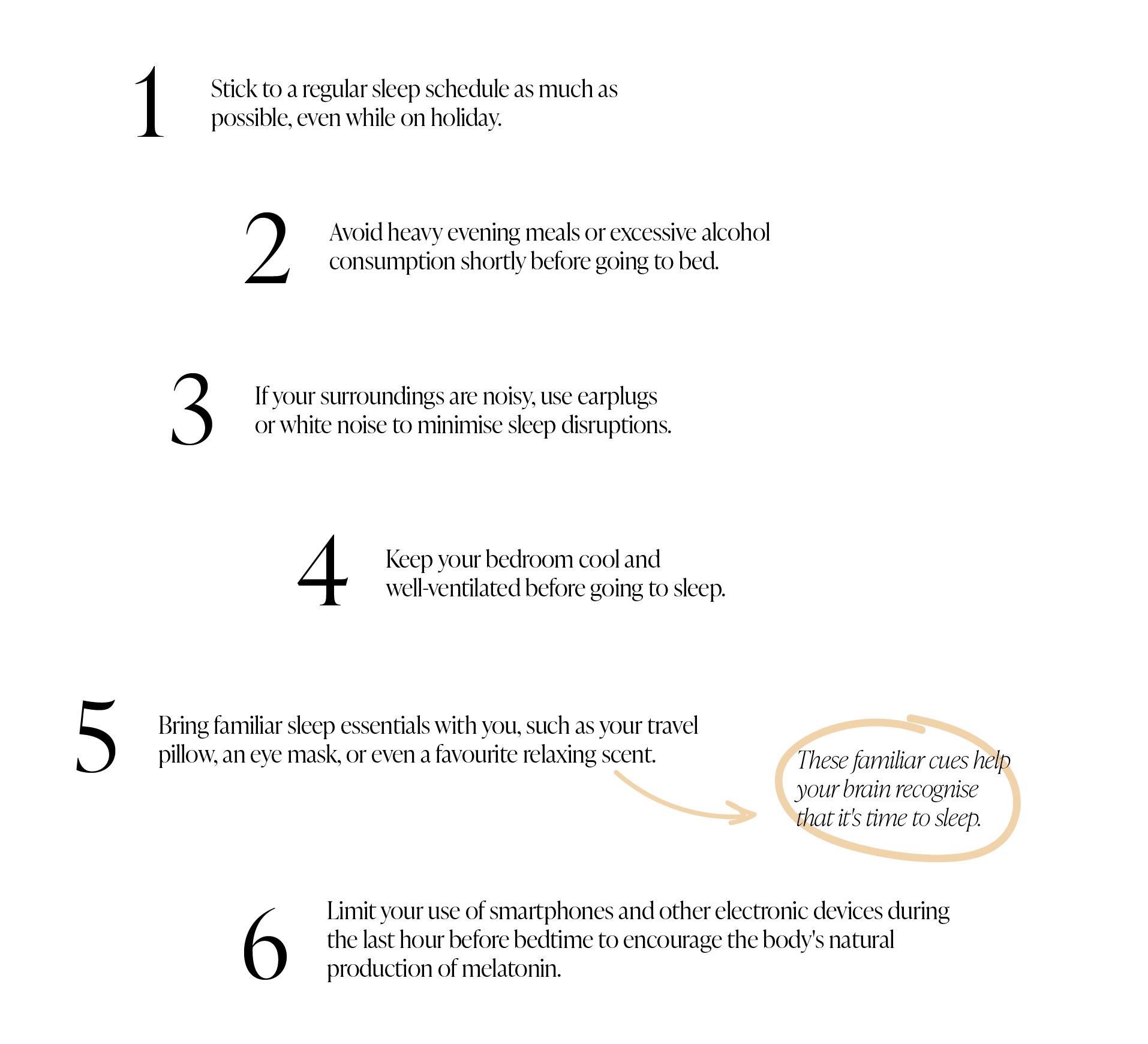
These are simple habits, but they can make a significant difference—especially during the first few nights of your holiday.
Sleeping well is part of a great holiday
Sleeping less well during the first few days of a holiday is a completely natural response. Your brain simply needs time to adapt to a new environment, and even small changes to your daily routine can have a greater impact on your sleep than you might expect.
The good news is that, by adopting a few simple habits and creating a comfortable sleep environment, you can minimise these effects and enjoy a truly restorative holiday. Because getting a good night’s sleep isn’t just about spending more hours in bed — it’s about achieving the quality of rest your body needs to return home feeling fully refreshed and recharged.
How to get your sleep routine back after your holiday
After several days away, it’s common to return home with your sleep schedule slightly out of sync. Getting back into your normal routine as soon as possible will help your body readjust more quickly.
Ideally, you should gradually return to your usual bedtime and wake-up schedule, expose yourself to natural daylight in the morning, and avoid taking long naps during the first few days after returning home. It’s also worth paying attention to your sleep environment. Sleeping on a mattress that provides proper support, promotes breathability, and helps maintain healthy spinal alignment can make it easier for your body to recover from the changes that come with travelling.
At Karibian, we design mattresses that deliver outstanding comfort throughout the year, adapting to each person’s individual needs so that sleeping at home remains the best way to restore your energy and overall well-being.
Sleeping well starts with choosing the right mattress
After a few days sleeping away from home, it’s easy to appreciate the importance of a good night’s rest. Sleep quality doesn’t depend solely on our habits; the mattress we sleep on every night also plays a key role.
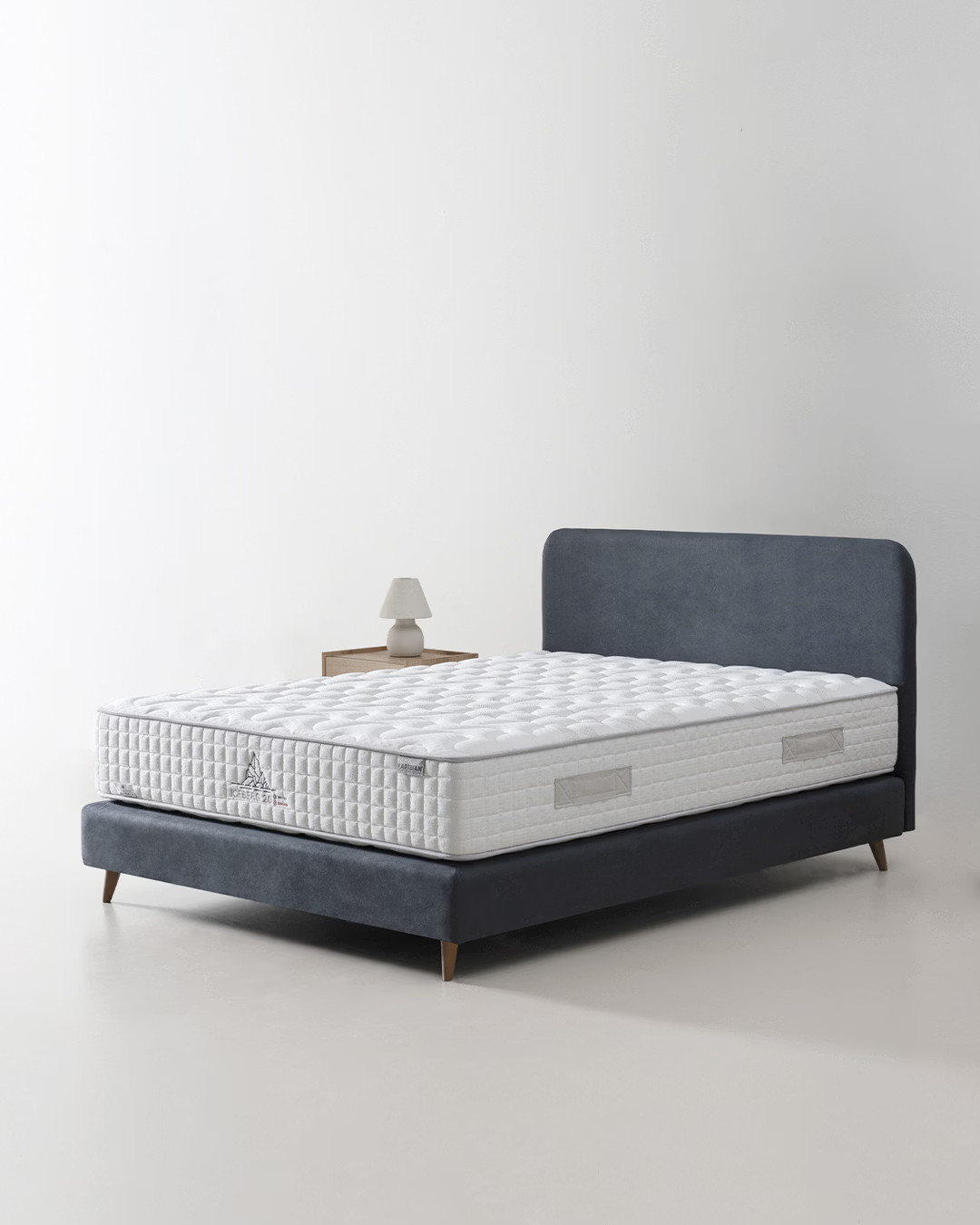
Discover the Karibian Descanso collection and find the mattress that best suits your needs
At Karibian, we design mattresses with people’s real well-being in mind, combining comfort, ergonomics and high-quality materials to provide the right sleep solution for every individual. Because sleeping well not only helps you recover after the holidays, but also improves your everyday life.

No Comments